
Britain’s Armed Forces need modern equipment and adequate funding. But the Ministry of Defence’s latest accounts raise some awkward questions about where the money goes.
Senior military commanders have been warning that Britain’s Armed Forces need more money. The world is becoming more dangerous, equipment is expensive and the demands placed on our military are increasing. It’s a serious argument, and one that deserves to be heard.
Unfortunately, the Ministry of Defence has just provided a rather uncomfortable accompaniment to the plea.
According to its own annual accounts, the department recorded £1.23 billion in losses during the 2025–26 financial year, spread across 17,622 cases. That followed £1.9 billion the previous year. In just two years, the MoD has reported more than £3.1 billion in losses.
That’s quite a substantial amount of money to mislay while asking the taxpayer for more.
The Expensive Art of Changing Your Mind
Among the largest entries is £254 million written off following the cancellation of the RAF’s Shadow Mk2 surveillance aircraft upgrade. The programme was supposed to improve Britain’s airborne intelligence capabilities, but was abandoned after delays, rising costs and failure to deliver the required capability.
Then there’s Project Morpheus, intended to modernise the Army’s battlefield communications. Its cancellation produced another £236 million write-off. Modern warfare depends on reliable communications, so this was hardly an optional luxury.
The Royal Navy also contributed. Taking HMS Richmond out of service resulted in a £46 million accounting loss, while HMS Chiddingfold and RFA Argus accounted for approximately £11 million and £9.5 million respectively.
And the biggest individual entry? A £408 million impairment arising from a review of historic work at the Atomic Weapons Establishment, responsible for Britain’s nuclear warheads.
It’s an impressive collection of expensive disappointments.
Not All Losses Are Equal
There is an important distinction here. A financial write-off doesn’t necessarily mean someone has just spent that amount of cash and received nothing in return.
Some losses reflect accounting corrections, assets losing their recorded value or equipment being withdrawn from service. The £408 million Atomic Weapons Establishment entry, for example, arose from a review of historic expenditure, including work whose lasting value could not be demonstrated.
Warships eventually become obsolete. Technology changes. And cancelling a failing project can be more sensible than continuing to pour money into it.
Nevertheless, the cancellation of major programmes after substantial expenditure raises legitimate questions about procurement, oversight and the decisions that allowed them to reach that stage.
Two Problems, Not One
Britain may genuinely need to spend considerably more on defence. Our Armed Forces cannot be expected to meet modern threats with outdated equipment or inadequate resources.
But that doesn’t mean the Ministry of Defence should be exempt from the financial discipline expected of other public organisations.
In fact, the National Audit Office reports that eight of the MoD’s 20 remaining major projects in the government’s portfolio were rated red in March 2026. Its auditors also reported limitations in the effectiveness of the department’s internal controls during 2025–26.
These are not particularly reassuring findings when the government is preparing to invest substantially more money.
The answer isn’t to punish soldiers, sailors and aircrew for decisions made far above their heads. Nor is it to pretend that every cancelled project represents incompetence.
The answer is better project management, stronger accountability and greater willingness to challenge ambitious contracts before the bills become astronomical.
More Money? Perhaps. More Accountability? Certainly.
The government has committed to increasing defence spending, and there are compelling reasons for strengthening Britain’s military capabilities.
But military readiness isn’t simply a question of how much money goes into the system. It’s also about how effectively that money emerges as functioning aircraft, ships, communications systems and equipment.
A billion pounds spent badly doesn’t become a good investment simply because it was spent on defence.
Our service personnel deserve the best equipment the country can reasonably provide. The taxpayers financing it deserve to know that somebody is watching the bill.
Before asking for another blank cheque, the Ministry of Defence might usefully explain what it has learned from the last few expensive mistakes.
Sources: Ministry of Defence Annual Report and Accounts 2025–26, particularly pages 154–155; National Audit Office assessment; and Parliamentary explanation of the Shadow Mk2 cancellation.

 Those Mid-Term Results
 Defense Spending
 Who is Gaslighting Us?
 Hands off our Freedom Passes!
 Top Chump gets Knighted
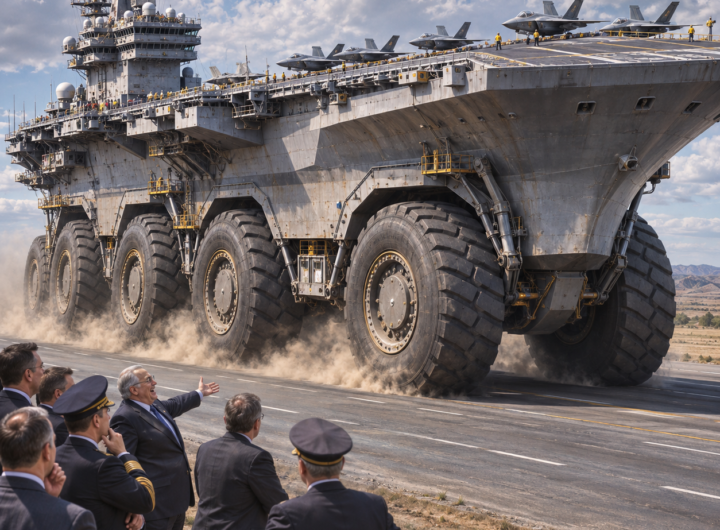 More Money for Defence? First, Explain the £3 Billion.
 NOTICE
 TV Review